Isadora Neves Marques creates visions of the present and future, blending sci-fi, biopolitics, and intimacy. Her films explore reproduction, bodies, empathy, and power in a world shaped by technology. Moving between speculative fiction and artistic approaches to documentary, she examines queerness, relationships, and social utopias in ways that are radical, sensuous, and strikingly relevant.
YWY, the Android Isadora Neves Marques / Portugal 2017 / 7'40" / DCP / colour / Portuguese / Fic
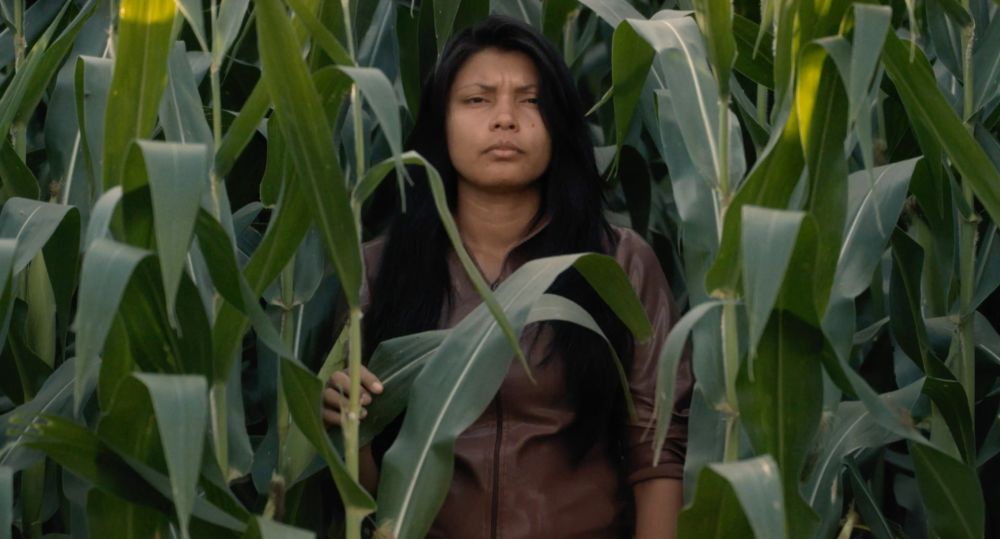
YWY, an indigenous android, talks with a GMO corn crop in the agricultural interior of Brazil. In a moment of intimacy, the woman, who we come to understand is a field worker, and the plants talk about bodily rights, infertility, labour, and monocrops. As a human, the spectator is unable to hear the voice of the corn, perceiving the dialogue as a weird monologue. The film’s script is inspired by the writing of Brazilian author João Guimarães Rosa, in which dialogues are often expressed through the voice of a single person rather than two or more.
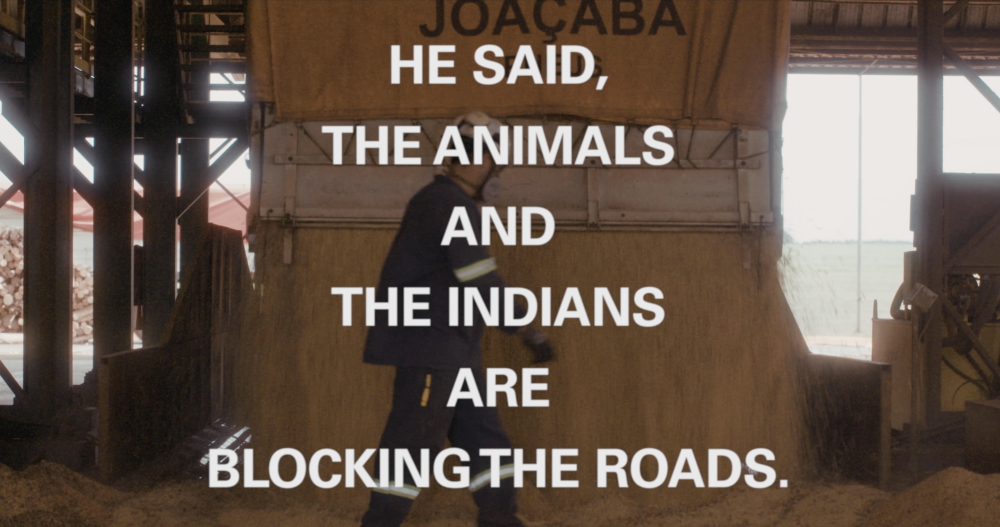
Shot in inner Rio Grande do Sul, Brazil, in a landscape transformed by the monoculture of mostly transgenic soy, maize, and sugar cane, the film follows the process of transforming soy crops into biodiesel, from the moment of harvest to the workflow of one of the main biodiesel processing factories in the region. A series of notes and reflections taken by the author are overlaid on the moving images. They ask: What kind of life lies in transgenic seeds? And what does it mean to live with the enemy?
A Mordida Isadora Neves Marques / Portugal/Brazil 2019 / 25'54" / DCP / colour / Portuguese / Fic
Between a house in the Atlantic Forest and a genetically modified mosquito factory near São Paulo, a polyamorous, non-binary relationship struggles to survive an epidemic spreading across Brazil. «A Mordida» is a film somewhere between horror, science fiction, and queer drama.
The Ovary Isadora Neves Marques / Portugal 2021 / 5'51" / DCP / colour / English / Fic
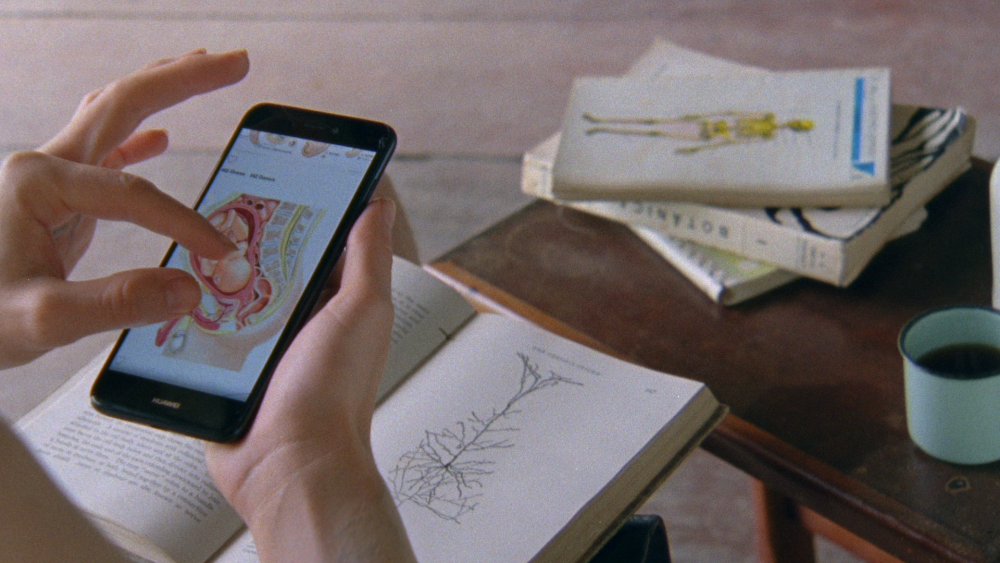
«The Ovary» is a short film narrating the attempts of a gay couple to reproduce biologically through an ovarian implant in a cis man. Imbued with an intimate and sensorial relation to images and accompanied by a cover of Lana Del Rey's pop song «Let Me Love You Like a Woman», the film is a raw and haunting approach to the online fan fiction genre Mpreg (a term for male pregnancy) and its tense, but also visionary, relation with surrogacy, privilege, and homonormativity.
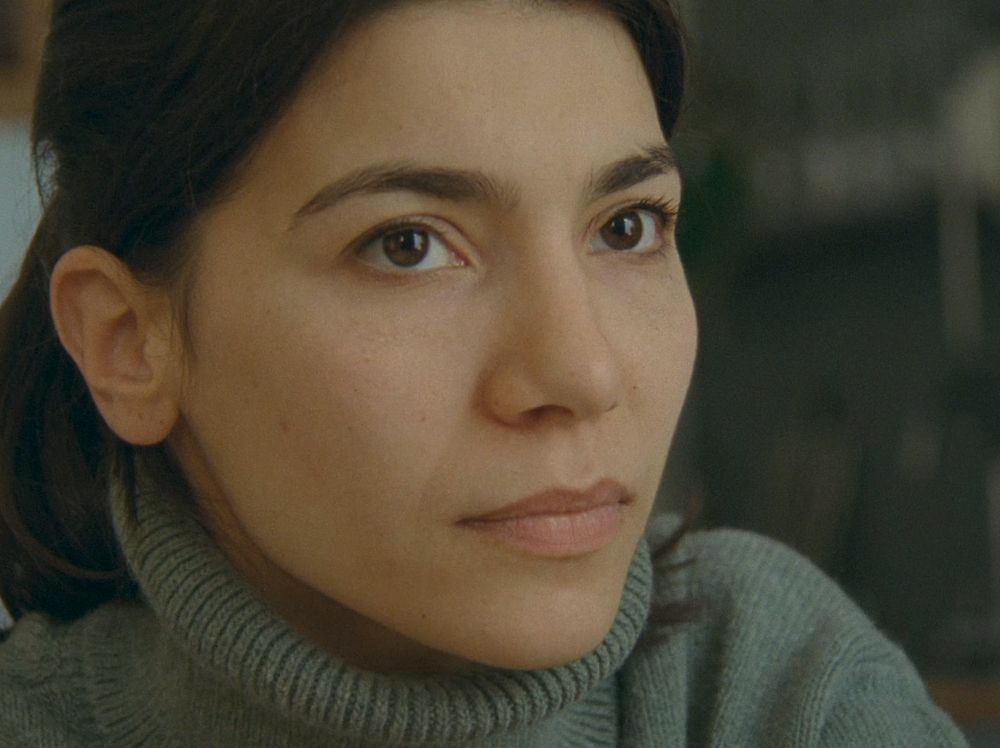
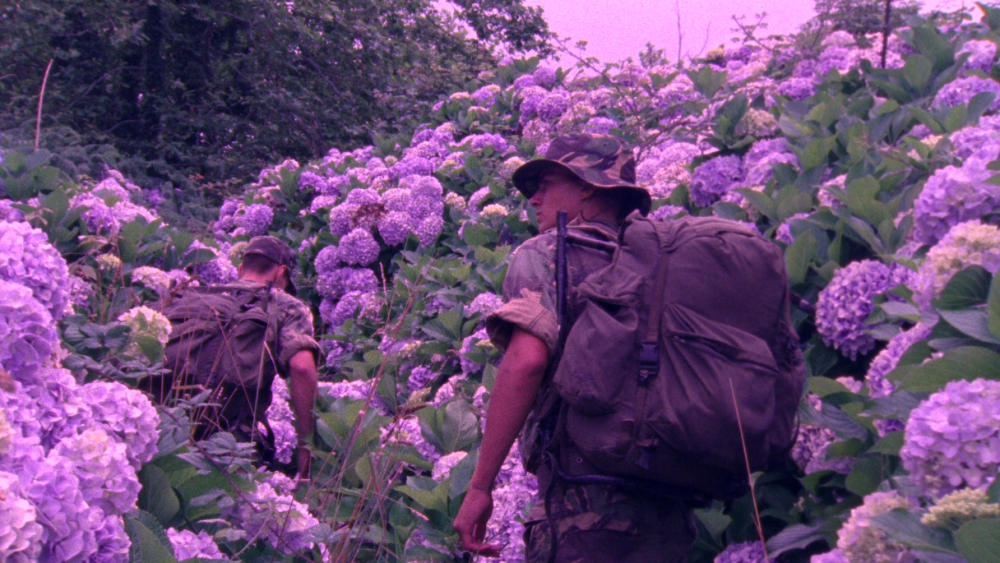
In a natural disaster scenario, the entire population of the Azores is evacuated due to a plague of hydrangeas. Two young soldiers guide us to the sad stories of those forced to leave. The cinematic journey becomes a nostalgic and political reflection on territorial belonging and identity.
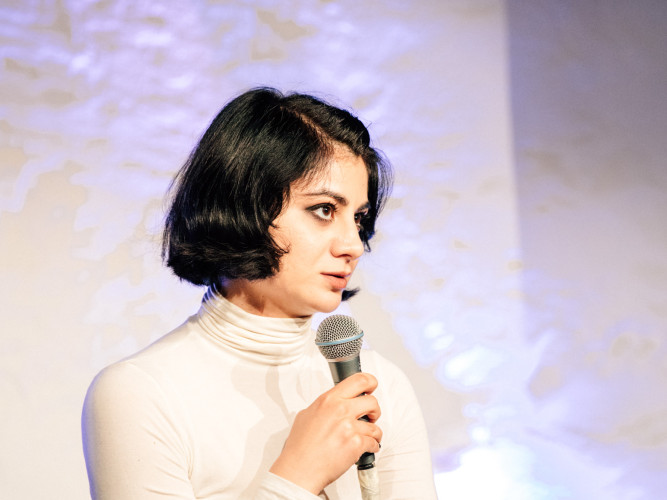
Isadora Neves Marques, born in 1984 in Lisbon, is a Portuguese artist, filmmaker, poet, and writer. Her work uniquely combines science, technology, ecology, gender, and queer identity. Until 2022, she worked under the name Pedro Neves Marques.
Isadora’s interdisciplinary practice moves between film, visual arts, and literature. In both poetic and analytical ways, she explores the effects of social, political, and biological systems on the human body and interpersonal relationships. In her artistic work, Neves Marques combines speculative fiction with documentary elements, drawing on strategies of science fiction to address contemporary questions around reproductive technologies, gender identity, biopolitics, or simply love and friendship. This is particularly evident in her films, which have been screened at numerous international festivals. In works such as «Exterminator Seed» or «The Bite», she addresses topics like genetic manipulation, virus outbreaks, and polyamorous relationships, continuously challenging normative ideas of gender, family, and intimacy. Her film «Becoming Male in the Middle Ages» explores reproductive desires in the context of queer identity, while «My Senses Are All I Have to Offer» tells of a biotechnology that allows people to experience the sensations of others – a fictional metaphor for empathy, transformation, and shared experience. Her films have been shown at the Semaine de la Critique in Cannes, Toronto International Film Festival (TIFF), International Film Festival Rotterdam (IFFR, where she was awarded the Ammodo Tiger Short Award for best short film in 2022), Festival du Nouveau Cinéma Montréal, New York Film Festival, Curtas Vila do Conde, and Internationale Kurzfilmtage Winterthur, among many others.
Neves Marques is also internationally recognized as a visual artist. She represented Portugal at the 59th Venice Biennale with her project «Vampires in Space», a speculative and political work that uses imaginaries of space sci-fi and vampires to reflect on transgender identity, mental health, and blockbuster cinema. Her works have been shown at major institutions such as Castello di Rivoli, Palais de Tokyo, Pérez Art Museum Miami, and Kyoto City University of the Arts Gallery, among others. She repeatedly succeeds in translating scientific and technological content into sensuous, narratively dense installations that are both intellectually challenging and emotionally accessible. In addition, Isadora Neves Marques has also established herself as a writer. Together with artist Alice dos Reis, she founded the poetry press Pântano Books in 2020, dedicated to promoting contemporary poetry. Her written works include collections of poetry and short stories. The films «Our Lady Who Burns» by Alice dos Reis and «Flores» by Jorge Jácome – both close companions of Isadora and key figures in contemporary Portuguese cinema and visual art – are also featured in the programme.
Isadora’s multimedia work, which constantly oscillates between reality and fiction, body and technology, science and poetry, has received multiple awards, including the Present Future Art Prize at Artissima and a special award from the Pinchuk Future Generation Art Prize. Together with other artists, she runs the production company Foi Bonita a Festa and, between 2015 and 2020, she operated the online platform inhabitants, which focused on socio-political issues through documentary and experimental video works.
Isadora Neves Marques is one of the most exciting voices in contemporary art and film. Her works not only question existing power structures and normative systems but also open alternative perspectives on possible, more just futures. Her art is both analysis and empathy – a rare balance that she maintains with extraordinary sensitivity and intellectual precision.
The Present of Speculative Bodies
Isadora Neves Marques, born in 1984 in Lisbon, is a Portuguese artist, filmmaker, poet, and writer. Her work uniquely combines science, technology, ecology, gender, and queer identity. Until 2022, she worked under the name Pedro Neves Marques.
Isadora’s interdisciplinary practice moves between film, visual arts, and literature. In both poetic and analytical ways, she explores the effects of social, political, and biological systems on the human body and interpersonal relationships. In her artistic work, Neves Marques combines speculative fiction with documentary elements, drawing on strategies of science fiction to address contemporary questions around reproductive technologies, gender identity, biopolitics, or simply love and friendship. This is particularly evident in her films, which have been screened at numerous international festivals. In works such as «Exterminator Seed» or «The Bite», she addresses topics like genetic manipulation, virus outbreaks, and polyamorous relationships, continuously challenging normative ideas of gender, family, and intimacy. Her film «Becoming Male in the Middle Ages» explores reproductive desires in the context of queer identity, while «My Senses Are All I Have to Offer» tells of a biotechnology that allows people to experience the sensations of others – a fictional metaphor for empathy, transformation, and shared experience. Her films have been shown at the Semaine de la Critique in Cannes, Toronto International Film Festival (TIFF), International Film Festival Rotterdam (IFFR, where she was awarded the Ammodo Tiger Short Award for best short film in 2022), Festival du Nouveau Cinéma Montréal, New York Film Festival, Curtas Vila do Conde, and Internationale Kurzfilmtage Winterthur, among many others.
Neves Marques is also internationally recognized as a visual artist. She represented Portugal at the 59th Venice Biennale with her project «Vampires in Space», a speculative and political work that uses imaginaries of space sci-fi and vampires to reflect on transgender identity, mental health, and blockbuster cinema. Her works have been shown at major institutions such as Castello di Rivoli, Palais de Tokyo, Pérez Art Museum Miami, and Kyoto City University of the Arts Gallery, among others. She repeatedly succeeds in translating scientific and technological content into sensuous, narratively dense installations that are both intellectually challenging and emotionally accessible. In addition, Isadora Neves Marques has also established herself as a writer. Together with artist Alice dos Reis, she founded the poetry press Pântano Books in 2020, dedicated to promoting contemporary poetry. Her written works include collections of poetry and short stories. The films «Our Lady Who Burns» by Alice dos Reis and «Flores» by Jorge Jácome – both close companions of Isadora and key figures in contemporary Portuguese cinema and visual art – are also featured in the programme.
Isadora’s multimedia work, which constantly oscillates between reality and fiction, body and technology, science and poetry, has received multiple awards, including the Present Future Art Prize at Artissima and a special award from the Pinchuk Future Generation Art Prize. Together with other artists, she runs the production company Foi Bonita a Festa and, between 2015 and 2020, she operated the online platform inhabitants, which focused on socio-political issues through documentary and experimental video works.
Isadora Neves Marques is one of the most exciting voices in contemporary art and film. Her works not only question existing power structures and normative systems but also open alternative perspectives on possible, more just futures. Her art is both analysis and empathy – a rare balance that she maintains with extraordinary sensitivity and intellectual precision.
Internationale Kurzfilmtage Winterthur is Switzerland’s major short film festival. For six days every November, we transform the city into a dynamic short film hub.
Kurzfilmtage offers discoveries for everyone: our thoughtfully compiled thematic programmes address current events or topics that our curators are passionate about. The competition programmes showcase the latest filmmaking from around the globe, while installations, performances, and other specials highlight the diversity of audiovisual forms. And a programme of special events including concerts, readings, and more enhance the festival experience.
The programme of the 30th Kurzfilmtage will be released on 14 October 2026.
A short film is not just a shorter film. Shorts are a distinct art form, which we showcase at our annual festival.
Short films come in all shapes and genres, and how long – or short – they are, varies quite a bit. Simpler production processes allow filmmakers to capture the zeitgeist and quickly respond to trends. Shorts can be entertaining or surprising, they can analyse society, take a political stance, or offer glimpses of worlds unknown to us.
We compile our short films into thematic programmes or specific sections, such as our competitions, paying close attention to the selection and sequence of films in each programme. All you need to enjoy short films is an open mind for new discoveries and surprises.
Competitions
Recent short films from around the world. The best shorts will be presented with awards on Sunday evening.
Hors Concours
Recent short films from Zurich, Switzerland, and around the world screened out of competition.
Focus
Films that explore a region, a social phenomenon, or an artistic trend.
Person in Focus
A spotlight on the work of a filmmaker.
Special Programmes
Short film programmes dedicated to topics that our curators are passionate about – or that are simply fun.
Family Programmes
Short film fun for young viewers aged 6+ and for the whole family.
Expanded Cinema
Installations, performances, and exhibitions present the medium of film in unfamiliar forms.
Special Events
Concerts, parties, readings, and many other events enhance the festival experience.
Talks & Panels
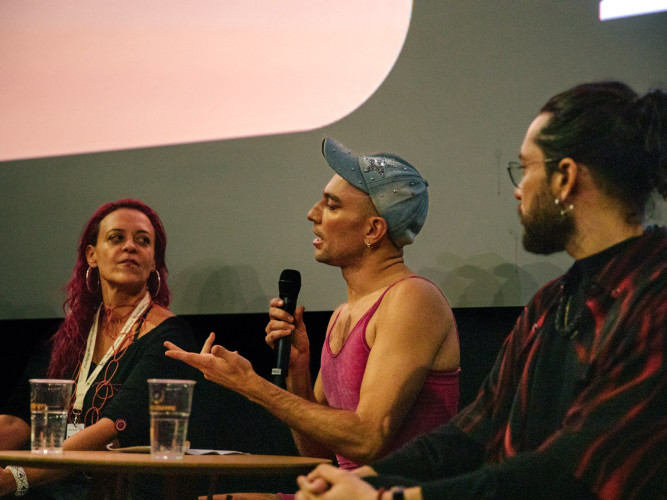
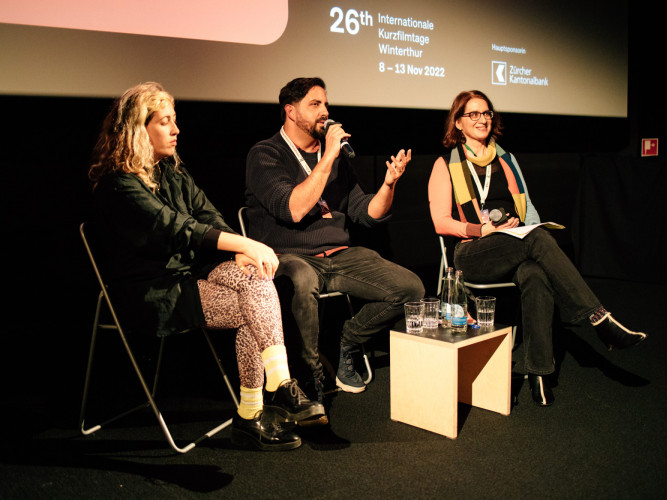
Moderated talks and panels after the screenings offer additional context and insight into films and themes.
Industry Events
A wide range of educational events and networking opportunities.