What lies hidden beneath the earth’s surface shapes landscapes as much as stories and images. This programme traces the history of oil as a resource, colonial promise, and contested archive. From British propaganda to poetic documentaries and a critical re-examination of historical images, the films offer multilayered perspectives on extraction, power, and cinema itself.
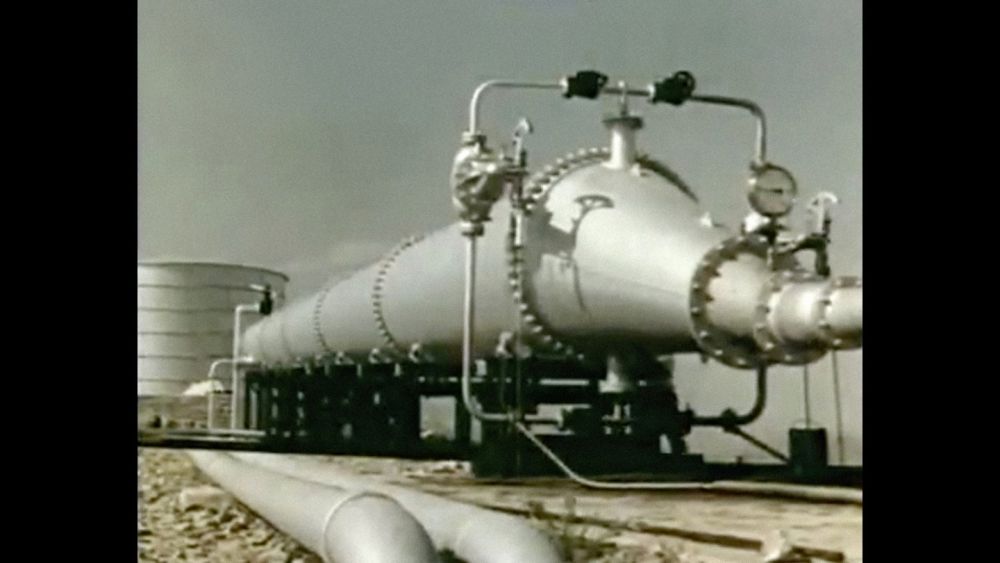
Persian Story Ralph Keene / United Kingdom 1952 / 20'44" / colour / English / Doc
A twenty-minute colour film shot during the last few months before the company's staff left Abadan in October 1951. It gives a vivid impression of the oilfields and the life led by the company's British and Persian employees.
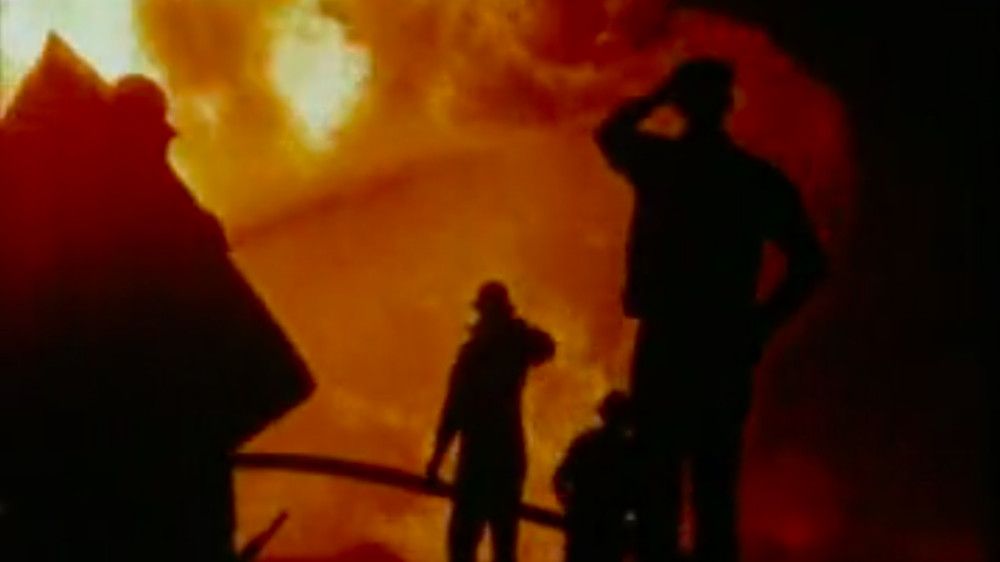
In the spring of 1958, an oil well in the southwest of Iran caught fire. Ebrahim Golestan took his small crew to the location and filmed the process of extinguishing the conflagration. Later, Forough Farrokhzad, fresh from a course on the use of archival footage in the UK, edited the film, which combined her poetic sensibilities with Golestan’s more symbolic approach. The result stands in sharp contrast with, for instance, Werner Herzog’s treatment of the same subject matter in «Lessons of Darkness». Golestan develops a folkloric narrative, a celebration of collective work by ordinary people, while Herzog gives us an operatic tale of individualism.
One Image, Two Acts Sanaz Sohrabi / Canada/Iran 2020 / 44'38" / colour / English/Persian / Doc
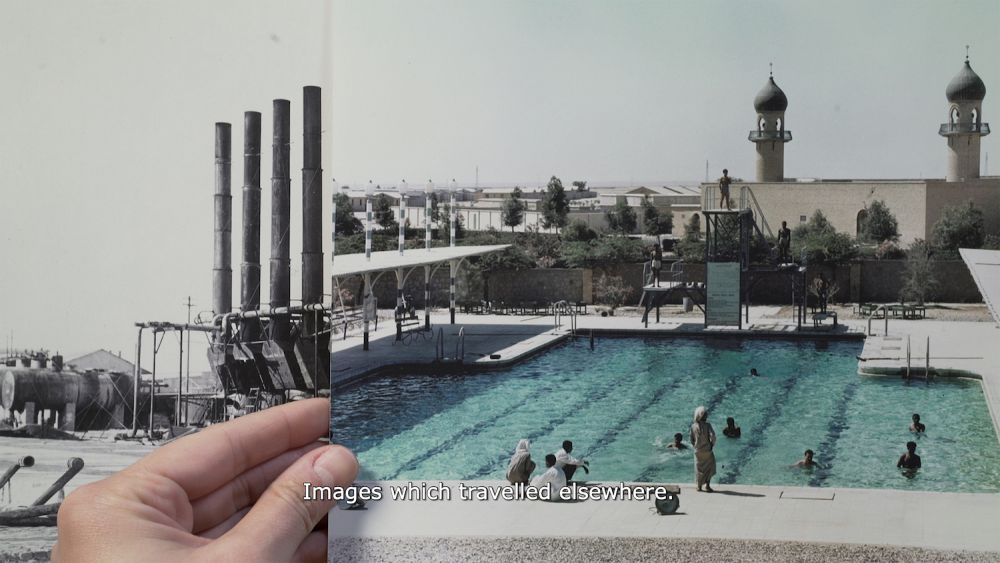
«One Image, Two Acts» examines the photographic and film archives of British Petroleum during its operations in Iran, Iraq, and Kuwait to unravel BP’s widespread construction of cinemas in the oil towns of Southwestern Iran. It follows the transformation of this emergent image economy, contouring the nationalization movement and the Iranian anticolonial cinema between 1950 and 1980 and traces the media infrastructures through which oil has operated as an agent of power in the colonial episteme.
Every image has a frame. And each frame determines what is visible and what remains out of sight. This applies to news reporting as much as to cinema. How Iran is framed, which stories are told, and what becomes visible depends on historical and political contexts.
Iran has been shaped by profound political and social changes. Over the course of a century, the country has experienced two revolutions: the Constitutional Revolution of 1905–06 and the Islamic Revolution of 1979. The empowerment of social groups defined these movements as much as the repeated influence exerted by imperial and ideological forces. The country’s political situation and perceptions of Iran have had a lasting impact on both domestic and diasporic filmmaking.
At least since the spring of 2026, the world’s attention has once again turned towards Iran, as war is shaking the country to its foundations. Our Focus programme Shifting Grounds – Framing Iran takes this as an occasion to challenge Eurocentric views of the country and to sharpen our awareness of the complexity of Iranian cinema and society – a complexity that defies simple explanations.
This Focus on Iranian cinema emerged from a collaboration between two non-Iranians and one Iranian curator. We conceive of «Iranian cinema» not as a fixed category, but rather as a perspective shaped by a range of attributions, contexts, and experiences. Questions about production conditions, the diaspora, and national identity intersect with interrogations of Western views and narrative patterns. What is perceived as Iranian cinema emerges from the interplay of festival practices, audience expectations, and cinematic self-representation. These diverse perspectives and their connections served as the starting point for this collaborative curation.
Six programmes bring together historical and contemporary works created in Iran and the diaspora, combining various documentary, fictional, and experimental forms. They range from the imagery of oil to issues of identity and self-determination outside social norms, from myth and reality to diverse forms of resistance. Works from the independent Cinema-ye Azad film movement of the 1970s are also represented. Many of the films navigate the space between inside and outside – between national borders, real walls, and fictional spaces, as well as the invisible borders in people’s minds.
The focus is not on the country itself, but on how Iran is seen, narrated, and imagined – and how cinema can keep reframing these images.
Vincent Förster, Lynn Gerlach, Afsun Moshiry
Sediments of Power
For over a century, what lies hidden beneath the earth’s surface has shaped not only landscapes, but also images, narratives, and political power. This programme traces the history of oil as a resource, colonial promise, and contested archive.
Ethnographic footage and industrial films serve not as neutral documents of their time, but as part of a visual order that was intended to legitimize colonial rule, and which continues to shape the image of Iran to this day.
«Persian Story», made shortly before the British withdrawal from Iran’s first oil city, Abadan, offers a documentary gaze while also revealing the colonial attitude behind its imagery. «Yek Atash» focuses on the local population. Footage of a burning oil field becomes a poetic exploration of the forces of nature and cultural memory. «One Image, Two Acts» offers a fresh interpretation of archival material. The film examines how the visual infrastructure of the Anglo-Iranian Oil Company shaped notions of modernity, work, and leisure, and how Iranian cinema later reclaimed these visual worlds. Here, oil functions not just as a raw material, but as an archive – a tapestry of images, infrastructures, and political imaginaries.
This is a programme about the power of images as well as images of power – the films uncover the vestiges of extraction layer by layer and, in doing so, reveal their continued impact on the present.
Internationale Kurzfilmtage Winterthur is Switzerland’s major short film festival. For six days every November, we transform the city into a dynamic short film hub.
Kurzfilmtage offers discoveries for everyone: our thoughtfully compiled thematic programmes address current events or topics that our curators are passionate about. The competition programmes showcase the latest filmmaking from around the globe, while installations, performances, and other specials highlight the diversity of audiovisual forms. And a programme of special events including concerts, readings, and more enhance the festival experience.
The programme of the 30th Kurzfilmtage will be released on 14 October 2026.
A short film is not just a shorter film. Shorts are a distinct art form, which we showcase at our annual festival.
Short films come in all shapes and genres, and how long – or short – they are, varies quite a bit. Simpler production processes allow filmmakers to capture the zeitgeist and quickly respond to trends. Shorts can be entertaining or surprising, they can analyse society, take a political stance, or offer glimpses of worlds unknown to us.
We compile our short films into thematic programmes or specific sections, such as our competitions, paying close attention to the selection and sequence of films in each programme. All you need to enjoy short films is an open mind for new discoveries and surprises.
Competitions
Recent short films from around the world. The best shorts will be presented with awards on Sunday evening.
Hors Concours
Recent short films from Zurich, Switzerland, and around the world screened out of competition.
Focus
Films that explore a region, a social phenomenon, or an artistic trend.
Person in Focus
A spotlight on the work of a filmmaker.
Special Programmes
Short film programmes dedicated to topics that our curators are passionate about – or that are simply fun.
Family Programmes
Short film fun for young viewers aged 6+ and for the whole family.
Expanded Cinema
Installations, performances, and exhibitions present the medium of film in unfamiliar forms.
Special Events
Concerts, parties, readings, and many other events enhance the festival experience.
Talks & Panels
Moderated talks and panels after the screenings offer additional context and insight into films and themes.
Industry Events
A wide range of educational events and networking opportunities.