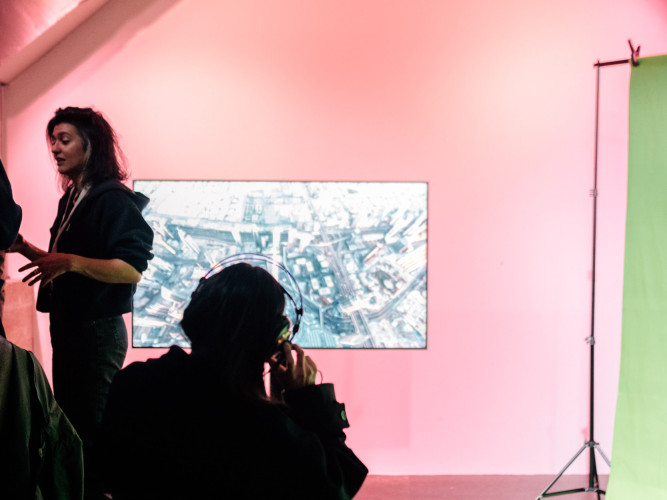
What appears on-screen usually conceals the process of its own creation. As viewers, we only see the result, but not the hours spent on set, the retakes, the waiting, or the instructions outside the frame. In We Make Cinema, we shift the focus away from the finished film to what goes on off-screen, which is at times tough, at times tender, often funny, and occasionally just delightful.
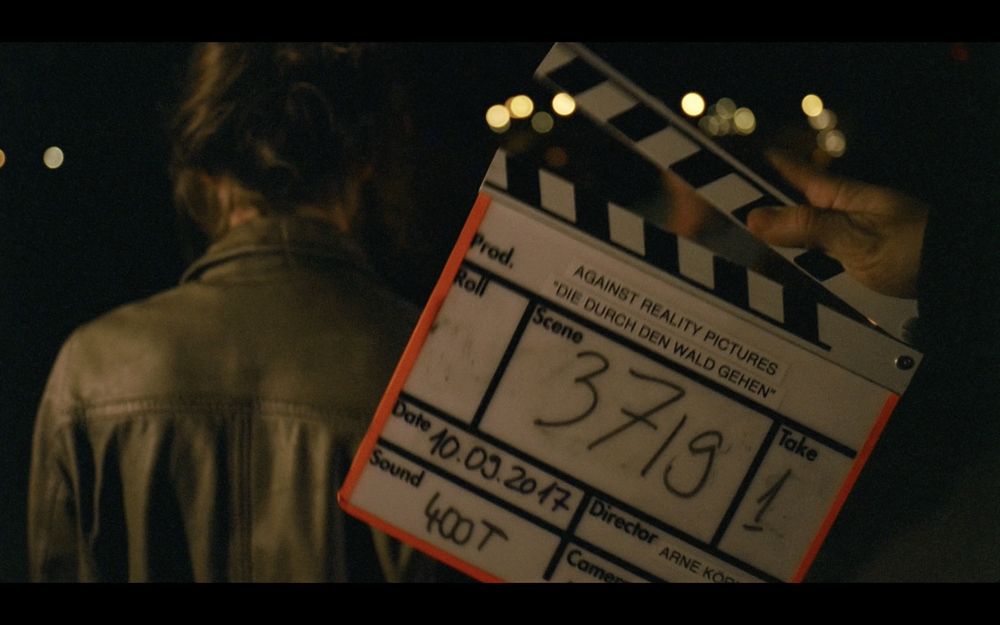
Action! Arne Körner / Germany 2022 / 1'7" / DCP / colour / German / Doc/Clip
At the centre of the story is a clapper and his clapperboard. A symphony of clapping.
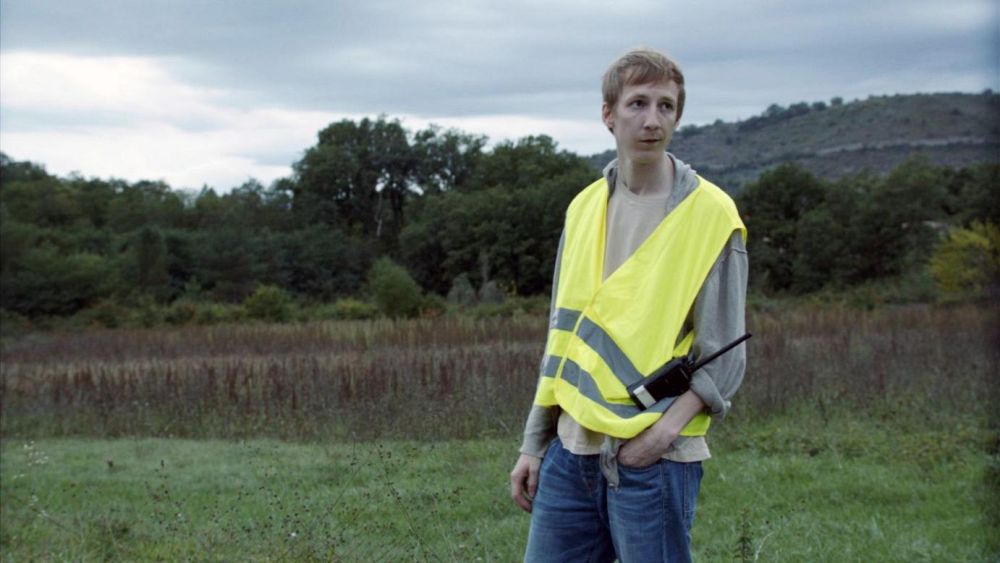
Die Ruhe bleibt Stefan Kriekhaus / Germany/Germany 2013 / 14'34" / DCP / colour / Fic
Tommy’s first film job. He wanted to be close to the action on set, to take it all in. But why is he now standing on a country road in the middle of nowhere, wearing a reflective vest, in a country where he doesn’t even speak the language?
8 years. 12 years. 15 years old. A body is growing and developing in front of the camera, absorbing sensations and emotions, confronting its limits and its darker hidden parts. A body that through the years abandons itself to the character, transforming what could be seen as simple (children's) play-acting into the work of a true actor. A portrait of an adolescent who has created himself with the camera.
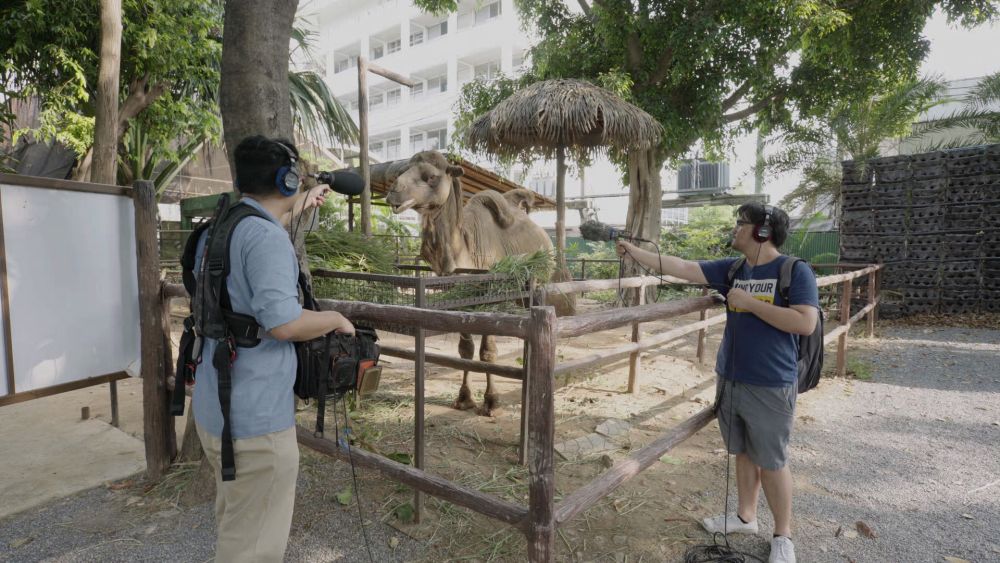
Death of the Sound Man Sorayos Prapapan / Thailand 2017 / 15'42" / DCP / colour / Thai / Fic
Two sound recordists are working on a film. They come to realize that just like the Thai government never listens to its citizen's voices, the audience doesn't care about the sound they worked so hard on.
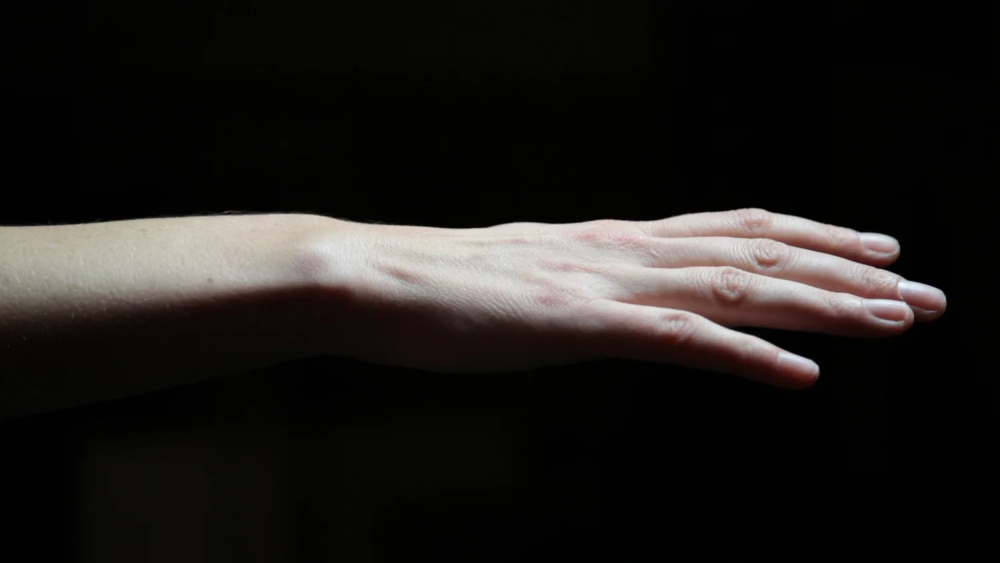
An experimental portrait of a lighting stand-in/body double, whose work and corporal self appear in films even if her name does not. Through a purposeful masking of the (sometimes subtle) differentiations between performance and acting, a famous Hollywood actress and her double, audience expectations and cinema magic, this video offers a look behind the silver screen.
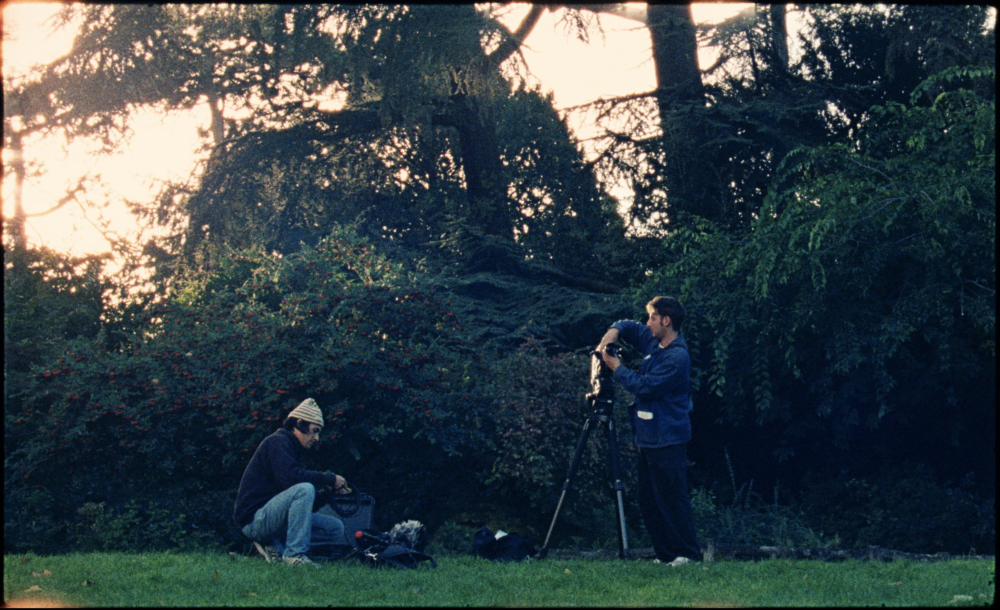
Montsouris Guil Sela / France 2024 / 13'53" / DCP / colour / French / Fic
On a beautiful autumn day in Montsouris Park, Jacques and Nathan are on the lookout for interesting people to feature in their documentary. They stumble upon Pierre and Martin, two odd characters about to experience an unexpected moment.
There are films that tell us a story, and there are films that show us how stories are told in the first place. So-called meta-cinema takes cinema itself as its subject: filmmaking and its apparatus, the acts of watching and being watched, ways of perceiving and thinking in moving images. These films point the camera at what we usually overlook because we’re so immersed in it, sitting in the dark, transfixed, staring at the screen. Meta-films reveal the seams, the tricks, the apparatus – but instead of demystifying the medium in the process, they make it all the more captivating.
Thus, we have chosen the theme of meta-cinema to mark the 30th anniversary of Internationale Kurzfilmtage Winterthur. Over the course of thirty editions, the festival has screened, defended, promoted, and cherished short films – so a Focus on the medium itself seems like an obvious choice. For the Love of Cinema is nothing more and nothing less than a love letter to film. A love rooted not so much in nostalgia, but in curiosity. To love cinema also means wanting to understand it: its mechanics, its emotional power, its influence on our worldview. We have compiled short films that share this love and bring it to life on screen. Some are tongue-in-cheek, some melancholy, and some radically inquisitive.
To love cinema also means wanting to learn from it. That’s why this Focus is structured around an idea formulated by the Swiss educator Johann Heinrich Pestalozzi. He conceived of learning as an interplay of hand, heart, and mind – a holistic approach to education that combines doing, feeling, and understanding. This triad lends itself well to cinema: every film is created by the hand that makes it, speaks to the heart it touches, and shapes the mind with which we interpret the world. This threefold structure is reflected in our three programmes: We Make Cinema, We Feel Cinema, and We Think Cinema.
It all starts with work. A film consists of craftsmanship. It is rehearsed, shot on set, edited, set to music, and brought to life by people we rarely see on-screen because they don’t appear in front of the camera. The first programme presents works about the process of filmmaking: about patience, skill, and the many hands that go into creating images.
Films don’t remain confined to the screen. They seep into our memory, blend with our existing mental images, and become part of us – precisely because (Western) film culture is so influential and popular worldwide and has such a profound impact on our society. The second programme is dedicated to cinema’s emotional resonance. It is about what films do to us, and what we carry within us as a result, long after the lights have come back on.
The way we think about reality – and the way we think in images – depends on how these images are created, framed, and asserted. The third programme takes the deeply rooted Western notion that seeing is believing and defines cinema itself as a school of thought. These films remind us that every image is a statement – and that seeing always also means thinking.
Our hope is to light a spark – for making, feeling, and thinking cinema. For the Love of Cinema.
John Canciani and Laura Walde
We Make Cinema
What appears on-screen usually conceals the process of its own creation. As viewers, we only see the result, but not the hours spent on set, the retakes, the waiting, the instructions and discussions that take place outside the frame. In We Make Cinema, we shift the attention away from the finished image to what goes on off-screen. The filmmakers in this programme focus on the process itself, observing themselves at work, revealing their craft, and questioning what it means to create images.
It all begins with the word that sets things in motion: «Action!» Arne Körner’s two-minute short takes us straight into the laboratory of cinema, capturing the exhilaration at the beginning of a shoot – the adrenaline, the tension, the leap into the unknown. What follows is the other side of this frenzy: «die Ruhe bleibt» by Stefan Kriekhaus focuses on those quiet, often invisible hours that make up most of the filmmaking process – the wait, the setup, the concentration. Ursula Meier powerfully illustrates how long the creative process can take: in «Kacey Mottet Klein, Birth of an Actor», she follows her young protagonist over the years, tracing his gradual evolution from child actor to fully-fledged professional. Here, filmmaking is a maturation process that cannot be forced, only observed. From the work in front of the camera our gaze shifts to what goes on behind the scenes, to the people we never see and only hear if we make a real effort: Following two sound engineers as they practice their seemingly unremarkable craft, Sorayos Prapapan’s «Death of the Sound Man» is a sly satire of the Thai film industry, where idealism and repression clash.
Jesse McLean’s «I’m in Pittsburgh and It’s Raining» portrays a body double – a person who remains nameless and faceless despite their visible work and physical presence on-screen. The essay film invites us to reflect on the melancholy inherent in image production and the loss that lies in the act of constantly capturing moments. The programme concludes with Guil Sela’s «Montsouris», a comedy between lofty artistic ambition and utter chaos, where the very act of filmmaking becomes the punchline. The film’s credits conclude with the line «Par amour du cinéma» – For the Love of Cinema. We have adopted the phrase as the motto for this entire Focus. As he makes his characters fail, improvise, and try again, Sela reminds us that all the effort, all the waiting, planning, and starting over is ultimately done out of love.
Internationale Kurzfilmtage Winterthur is Switzerland’s major short film festival. For six days every November, we transform the city into a dynamic short film hub.
Kurzfilmtage offers discoveries for everyone: our thoughtfully compiled thematic programmes address current events or topics that our curators are passionate about. The competition programmes showcase the latest filmmaking from around the globe, while installations, performances, and other specials highlight the diversity of audiovisual forms. And a programme of special events including concerts, readings, and more enhance the festival experience.
The programme of the 30th Kurzfilmtage will be released on 14 October 2026.
A short film is not just a shorter film. Shorts are a distinct art form, which we showcase at our annual festival.
Short films come in all shapes and genres, and how long – or short – they are, varies quite a bit. Simpler production processes allow filmmakers to capture the zeitgeist and quickly respond to trends. Shorts can be entertaining or surprising, they can analyse society, take a political stance, or offer glimpses of worlds unknown to us.
We compile our short films into thematic programmes or specific sections, such as our competitions, paying close attention to the selection and sequence of films in each programme. All you need to enjoy short films is an open mind for new discoveries and surprises.
Competitions
Recent short films from around the world. The best shorts will be presented with awards on Sunday evening.
Hors Concours
Recent short films from Zurich, Switzerland, and around the world screened out of competition.
Focus
Films that explore a region, a social phenomenon, or an artistic trend.
Person in Focus
A spotlight on the work of a filmmaker.
Special Programmes
Short film programmes dedicated to topics that our curators are passionate about – or that are simply fun.
Family Programmes
Short film fun for young viewers aged 6+ and for the whole family.
Expanded Cinema
Installations, performances, and exhibitions present the medium of film in unfamiliar forms.
Special Events
Concerts, parties, readings, and many other events enhance the festival experience.
Talks & Panels
Moderated talks and panels after the screenings offer additional context and insight into films and themes.
Industry Events
A wide range of educational events and networking opportunities.