Ce site utilise des cookies pour l'analyse anonyme des visiteurs et pour désactiver ce message dès son acceptation. Aucune donnée personnelle ou d'identification n'est collectée.
Cinema-ye Azad – Songs of Becoming brings together four films from Iran’s Cinema-ye Azad movement of the 1970s, where childhood dreams, faith, love, loss, and memory become ways of searching for meaning. Created on the eve of the 1979 Revolution, these films capture a society in transition through intimate, poetic stories. Together, they offer a rare glimpse into a vibrant cinematic movement whose existential questions continue to resonate today.
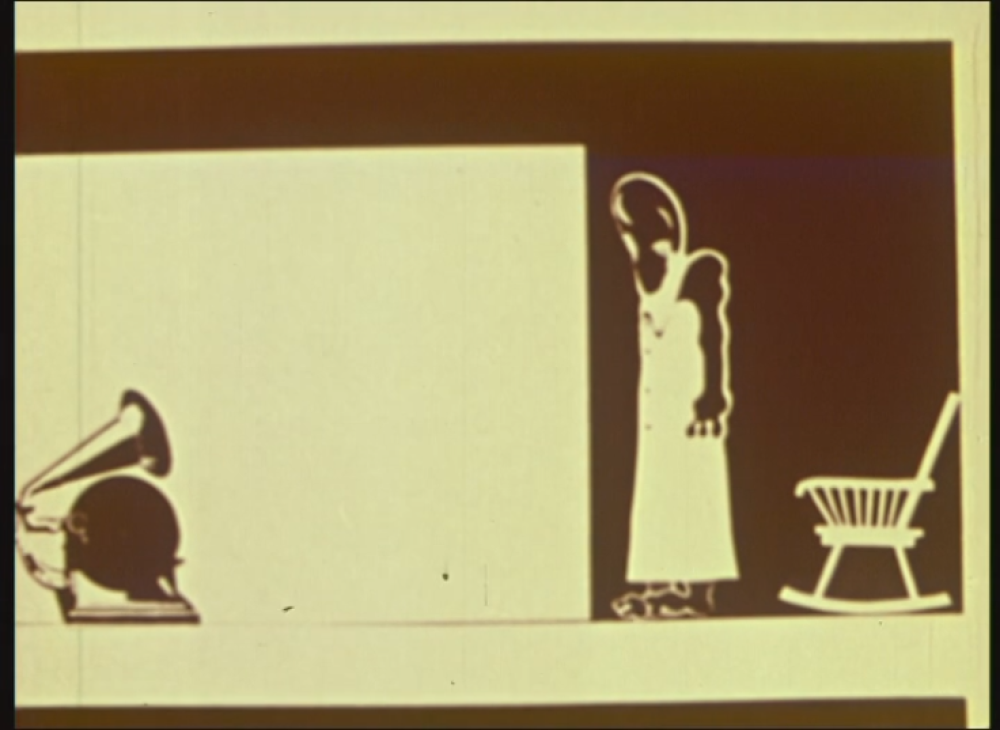
An entity that is all ears, living in an apartment complex in a city with towering skyscrapers and full of noise, finds life difficult to bear due to its sensitivity to noise. It discovers a solution: a record that, when placed on a gramophone, broadcasts negative frequencies of outside environmental sounds. And the result of the sound played from this is the sound of silence… silence.
Every image has a frame. And each frame determines what is visible and what remains out of sight. This applies to news reporting as much as to cinema. How Iran is framed, which stories are told, and what becomes visible depends on historical and political contexts.
Iran has been shaped by profound political and social changes. Over the course of a century, the country has experienced two revolutions: the Constitutional Revolution of 1905–06 and the Islamic Revolution of 1979. The empowerment of social groups defined these movements as much as the repeated influence exerted by imperial and ideological forces. The country’s political situation and perceptions of Iran have had a lasting impact on both domestic and diasporic filmmaking.
At least since the spring of 2026, the world’s attention has once again turned towards Iran, as war is shaking the country to its foundations. Our Focus programme Shifting Grounds – Framing Iran takes this as an occasion to challenge Eurocentric views of the country and to sharpen our awareness of the complexity of Iranian cinema and society – a complexity that defies simple explanations.
This Focus on Iranian cinema emerged from a collaboration between two non-Iranians and one Iranian curator. We conceive of «Iranian cinema» not as a fixed category, but rather as a perspective shaped by a range of attributions, contexts, and experiences. Questions about production conditions, the diaspora, and national identity intersect with interrogations of Western views and narrative patterns. What is perceived as Iranian cinema emerges from the interplay of festival practices, audience expectations, and cinematic self-representation. These diverse perspectives and their connections served as the starting point for this collaborative curation.
Six programmes bring together historical and contemporary works created in Iran and the diaspora, combining various documentary, fictional, and experimental forms. They range from the imagery of oil to issues of identity and self-determination outside social norms, from myth and reality to diverse forms of resistance. Works from the independent Cinema-ye Azad film movement of the 1970s are also represented. Many of the films navigate the space between inside and outside – between national borders, real walls, and fictional spaces, as well as the invisible borders in people’s minds.
The focus is not on the country itself, but on how Iran is seen, narrated, and imagined – and how cinema can keep reframing these images.
Vincent Förster, Lynn Gerlach, Afsun Moshiry
Cinema-ye Azad: Songs of Becoming
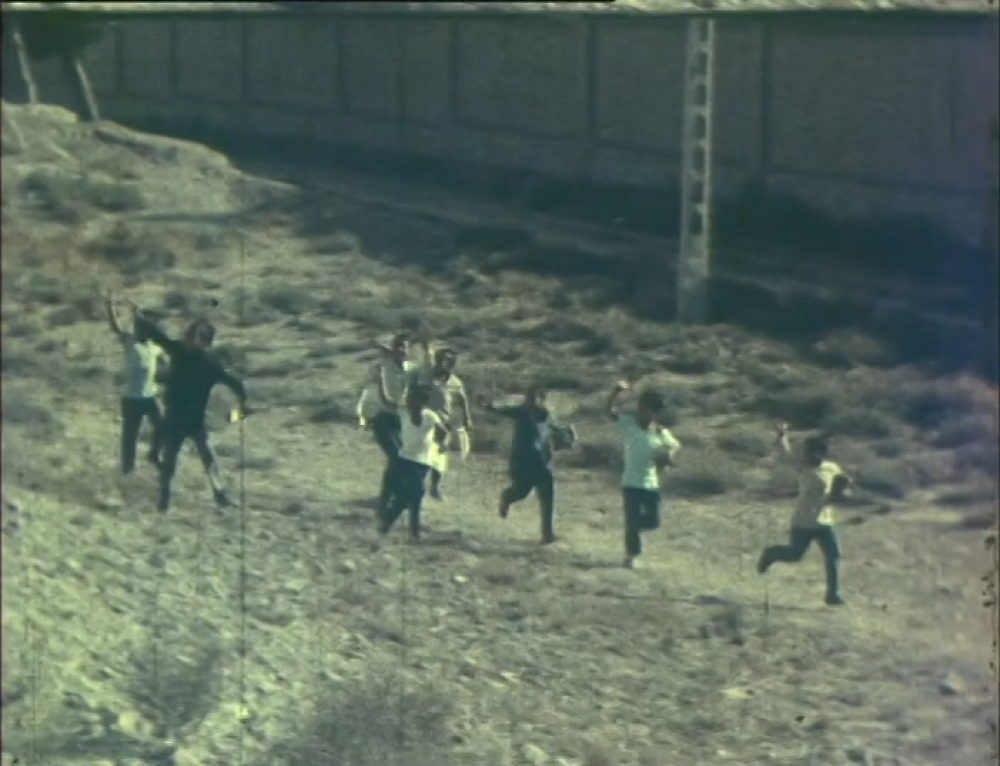
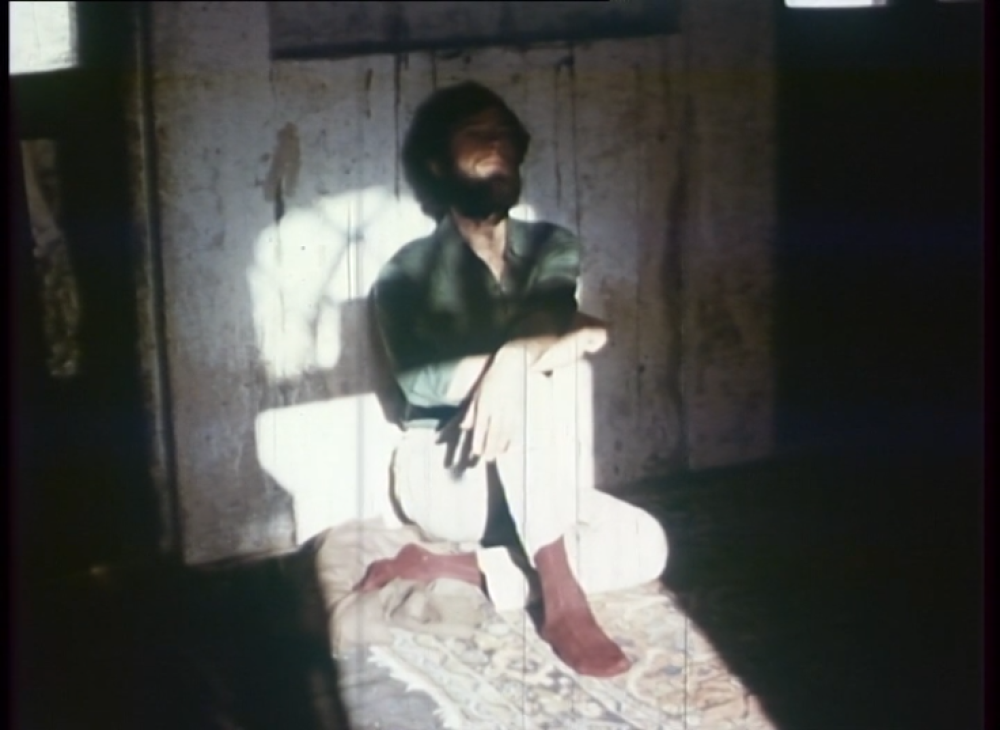
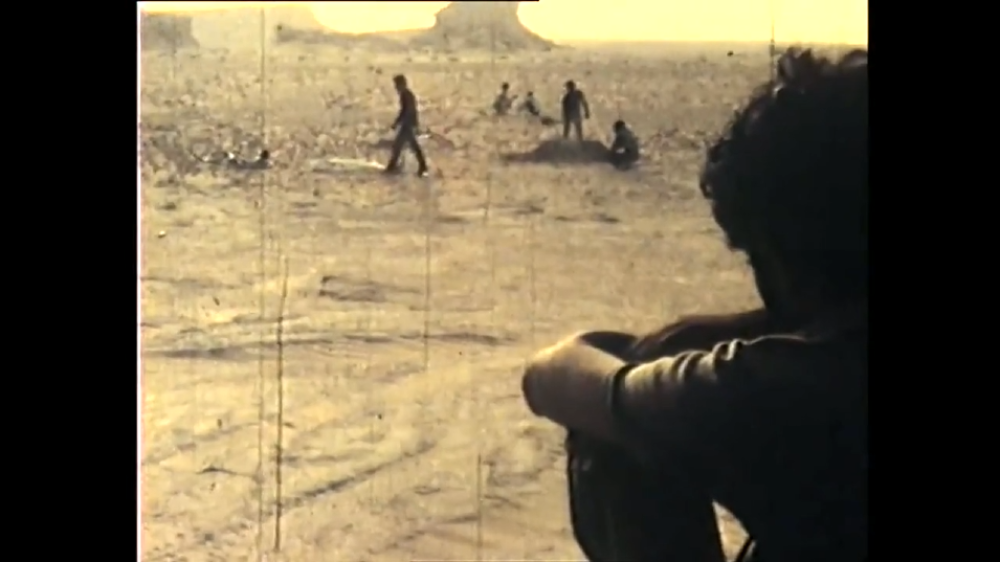
Cinema-ye Azad – Songs of Becoming brings together four films from the Cinema-ye Azad movement that explore the search for meaning across childhood and adulthood. Produced during the 1970s, a decade of profound social transformation and mounting political tensions in Iran that culminated in the 1979 Revolution, the films deal with questions of identity, belonging, faith, and the possibility of the future. Rather than offering political statements, they reflect an atmosphere in which existential inquiry became inseparable from a society in transition. In «Jadeh» (1972) by Mohammad Jafari Harandi, we encounter a dreamlike childhood filled with hope, where life's grand aspirations still emerge from the smallest moments. Music becomes the first soundtrack of life, accompanying memories and longings. «Dar Falagh» (1975) by Zavon Ghokasian takes us to Isfahan, following a man in his search for meaning as he navigates faith, love, and belonging. At the same time, the film offers a rare glimpse into Jolfa, the Christian district of Isfahan, whose culture and music have seldom found representation in Iranian cinema. In «Nahang» (1972) by Hassan Bani-Hashemi, a man is found dead by the sea. A former companion sets out to understand the circumstances of his death. His search for the meaning of the man's life and death evolves into an existential reflection on memory. «Seda-ye Tazeh» (1976) by Soheil Souzani concludes with a search for meaning not in answers, but in an open question.
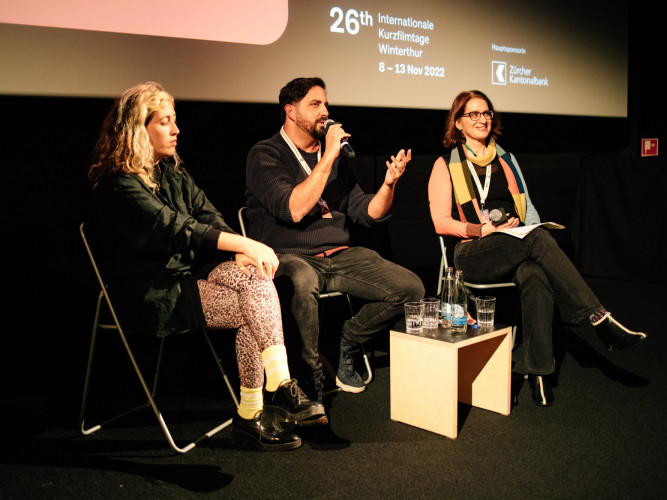
Les Internationale Kurzfilmtage Winterthur représentent le plus important festival de courts métrages en Suisse. Chaque mois de novembre, Winterthour se transforme en métropole du court métrage pendant six jours.
Le programme des 30ᵉ Kurzfilmtage sera annoncé le 14 octobre 2026.
Des courts métrages actuels du monde entier. Les œuvres les plus prometteuses seront récompensées le dimanche soir.
Hors Concours
Des courts métrages actuels zurichois, suisses et internationaux diffusés en dehors de nos compétitions.
Focus
Une analyse en images d’une région, d’un phénomène social ou d’une tendance artistique.
Focus sur une personne
L’œuvre d’un·e cinéaste est mise sur le devant de la scène.
Programmes spéciaux
Des programmes de courts métrages sur des thématiques brûlantes, ou simplement divertissantes.
Programmes familiaux
Des courts métrages pour les jeunes dès 6 ans et toute la famille.
Expanded Cinema
Des installations, des performances et des expositions qui font découvrir au public des formes de cinéma inhabituelles.
Programme d’événements
Des concerts, des soirées, des lectures et de nombreux autres événements qui complètent l’expérience du festival.
Discussions et podiums
Des discussions et des tables rondes animées durant lesquelles l'art du cinéma ou des thématiques précises sont approfondis.
Industry Events
Un large éventail d’événements d’information, de formation et de réseautage.
Le court métrage
Le court métrage n’est pas juste un film «court». C’est une forme d’art à part entière à laquelle nous consacrons chaque année un festival.
Il existe des courts métrages de tous genres et de toutes longueurs. Grâce à des voies de production facilitées, il permet de capter rapidement une époque et de l’illustrer. Il divertit, surprend, analyse lasociété, exprime une opinion politique ou donne un aperçu de mondes étrangers.
Nous rassemblons nos courts métrages pour créer des programmes thématiques ou des sections – comme nos compétitions – et nous les projetons dans un ordre bien précis. Pour apprécier le court métrage, il suffit d’être curieux, d’avoir envie de faire des découvertes et de se laisser surprendre.