Ce site utilise des cookies pour l'analyse anonyme des visiteurs et pour désactiver ce message dès son acceptation. Aucune donnée personnelle ou d'identification n'est collectée.
The competition programmes feel the pulse of current global filmmaking, transforming the city into an international short film hub for six days. The best works from all competition categories will be honoured with prizes at the Award Ceremony on Sunday.
Here we present the latest national short films. Once again, the Swiss selection includes numerous premieres, offering plenty of room for discoveries. Join us on Sunday at the Award Ceremony to witness how the jury awards various prizes to the best films of this year’s festival edition.
With the Sparks programmes, we hope to spark a passion for the medium of short film. Featuring highlights from this year’s submissions, Sparks I & II are competition programmes that represent a broad range of current filmmaking. The selection is meant to appeal to multigenerational audiences and inspire discussion. Showcasing a diverse film culture beyond the mainstream and YouTube clips, the programmes offer an ideal introduction to the world of shorts. At the Award Ceremony on Sunday, the youth jury will award the prize for the best film from the Sparks section.
Kurzfilmtage’s annual Swiss Film School Day is a showcase of Switzerland’s six undergraduate degree programmes. Ecole cantonale d’art de Lausanne (ECAL), the Geneva University of Art and Design (HEAD), the Zurich University of the Arts (ZHdK), the Lucerne School of Design, Film and Art – Video/Animation, and the International Academy of Audiovisual Sciences (CISA) present a selection of their recent short films in three sessions followed by film talks led by Filmexplorer. Admission to the Swiss Film School Day is free – a great opportunity to get a first glimpse of Kurzfilmtage!
Iran has been shaped by profound political and social changes, that have had a lasting impact on both domestic and diasporic filmmaking. The Focus: Shifting Grounds – Framing Iran takes this as an occasion to sharpen our awareness of the complexity of a cinema that defies simple explanations. Six programmes bring together historical and contemporary works created in Iran and the diaspora. These range from the imagery of oil to questions of identity and self-determination outside social norms, from myth and reality to diverse forms of resistance and works of the independent film movement Cinema-ye Azad of the 1970s. The films combine documentary, fictional and experimental forms. The focus is not on the country itself, but on how Iran is seen, narrated, and imagined – and how cinema can keep reframing these images.
Some films tell stories, while others tell us about cinema itself. To mark the 30th anniversary of Kurzfilmtage, this Focus is dedicated to the medium itself. Across three programmes, these short films explore filmmaking, its emotional power, and ways of thinking in images. This is our love letter to film and to all it entails – the magic of making, feeling, and thinking cinema. For the Love of Cinema.
What if the future is already here? Gala Hernández López explores the strange worlds where technology, money, and desire meet – from incels and crypto dreams to cryonics, self-optimization, and the possibility of controlling our dreams. Moving between documentary and science fiction, her films reveal how digital fantasies become real desires, markets, and infrastructures, asking whether we still dream of the future, or whether our systems have begun to dream for us.
This section showcases recent short films from Zurich, Switzerland, and around the world screened out of competition. For short film buffs who are unafraid of strange or profound works with cult potential – discover some rare finds from our treasure chest!
This section presents programmes on topics that our curators are passionate about or that are simply fun. From historical works calling for social cohesion or exploring how we deal with memory to perspectives on femininity and shorts that let us experience moments of cringe: there’s a lot to discover in our Special Programmes.
Stories for children aged 6+ kindle curiosity, empathy, and creativity, eliciting a sense of wonder. And our selection of serious, amusing, and exciting shorts for kids aged 9+ inspires discussion, offering families a great introduction to the universe of short films. In collaboration with the Magic Lantern, Kurzfilmtage offers a unique filmgoing experience for young viewers and their families.
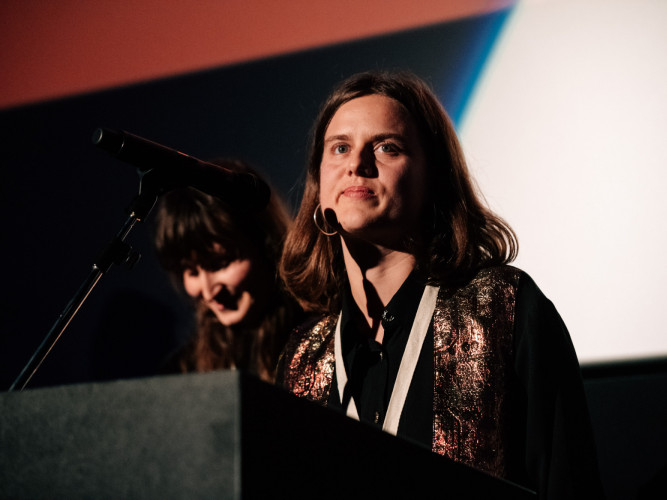
Whether with our festive Opening, a moving Award Ceremony, or the Best of programmes on Sunday – we open and close Kurzfilmtage in style. Together with filmmakers, audiences, and partners, we celebrate the art of short film, showing that shorts are made for the big screen.
From the cinema to the dance floor: Kurzfilmtage invites you to shake a leg to live bands and DJs. Concerts and parties – including our legendary closing party – round off the festival experience. Kraftfeld has once again compiled a delicious programme for night owls. Come, listen, dance!
Kurzfilmtage’s Industry Events consist of the Swiss Film School Day, the Industry Lab, and the Creators’ Room. They offer film professionals an opportunity for networking and for discussing current issues, creative methods, and aesthetic trends.
There are films that tell us a story, and there are films that show us how stories are told in the first place. So-called meta-cinema takes cinema itself as its subject: filmmaking and its apparatus, the acts of watching and being watched, ways of perceiving and thinking in moving images. These films point the camera at what we usually overlook because we’re so immersed in it, sitting in the dark, transfixed, staring at the screen. Meta-films reveal the seams, the tricks, the apparatus – but instead of demystifying the medium in the process, they make it all the more captivating.
Thus, we have chosen the theme of meta-cinema to mark the 30th anniversary of Internationale Kurzfilmtage Winterthur. Over the course of thirty editions, the festival has screened, defended, promoted, and cherished short films – so a Focus on the medium itself seems like an obvious choice. For the Love of Cinema is nothing more and nothing less than a love letter to film. A love rooted not so much in nostalgia, but in curiosity. To love cinema also means wanting to understand it: its mechanics, its emotional power, its influence on our worldview. We have compiled short films that share this love and bring it to life on screen. Some are tongue-in-cheek, some melancholy, and some radically inquisitive.
To love cinema also means wanting to learn from it. That’s why this Focus is structured around an idea formulated by the Swiss educator Johann Heinrich Pestalozzi. He conceived of learning as an interplay of hand, heart, and mind – a holistic approach to education that combines doing, feeling, and understanding. This triad lends itself well to cinema: every film is created by the hand that makes it, speaks to the heart it touches, and shapes the mind with which we interpret the world. This threefold structure is reflected in our three programmes: We Make Cinema, We Feel Cinema, and We Think Cinema.
It all starts with work. A film consists of craftsmanship. It is rehearsed, shot on set, edited, set to music, and brought to life by people we rarely see on-screen because they don’t appear in front of the camera. The first programme presents works about the process of filmmaking: about patience, skill, and the many hands that go into creating images.
Films don’t remain confined to the screen. They seep into our memory, blend with our existing mental images, and become part of us – precisely because (Western) film culture is so influential and popular worldwide and has such a profound impact on our society. The second programme is dedicated to cinema’s emotional resonance. It is about what films do to us, and what we carry within us as a result, long after the lights have come back on.
The way we think about reality – and the way we think in images – depends on how these images are created, framed, and asserted. The third programme takes the deeply rooted Western notion that seeing is believing and defines cinema itself as a school of thought. These films remind us that every image is a statement – and that seeing always also means thinking.
Our hope is to light a spark – for making, feeling, and thinking cinema. For the Love of Cinema.
Les Internationale Kurzfilmtage Winterthur représentent le plus important festival de courts métrages en Suisse. Chaque mois de novembre, Winterthour se transforme en métropole du court métrage pendant six jours.
Le programme des 30ᵉ Kurzfilmtage sera annoncé le 14 octobre 2026.
Des courts métrages actuels du monde entier. Les œuvres les plus prometteuses seront récompensées le dimanche soir.
Hors Concours
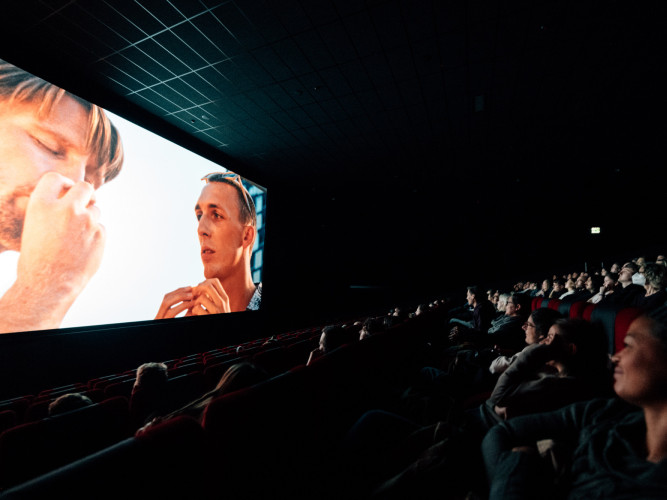
Des courts métrages actuels zurichois, suisses et internationaux diffusés en dehors de nos compétitions.
Focus
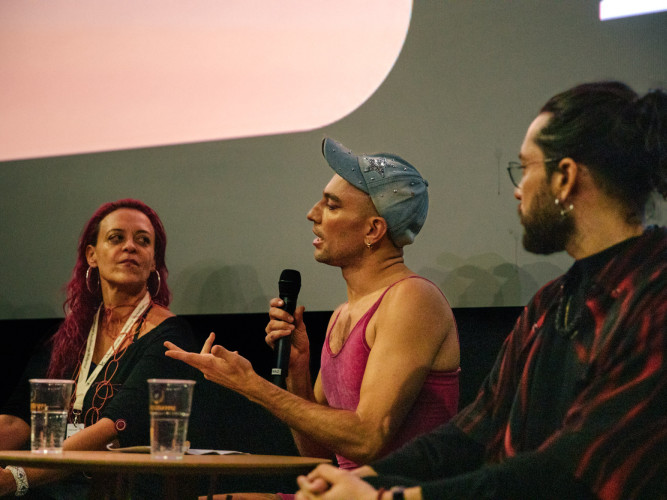
Une analyse en images d’une région, d’un phénomène social ou d’une tendance artistique.
Focus sur une personne
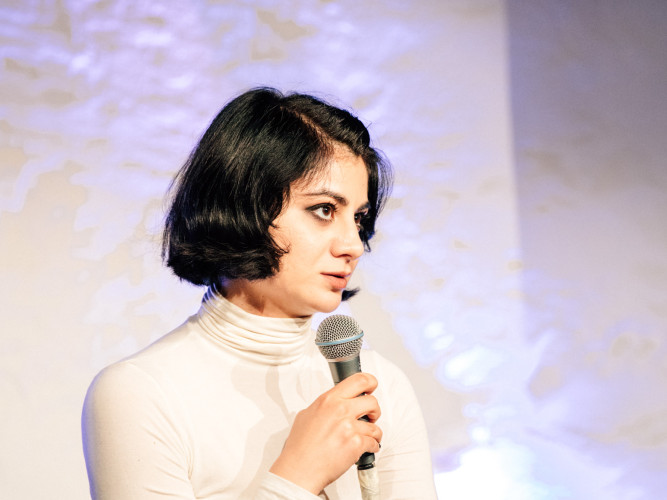
L’œuvre d’un·e cinéaste est mise sur le devant de la scène.
Programmes spéciaux
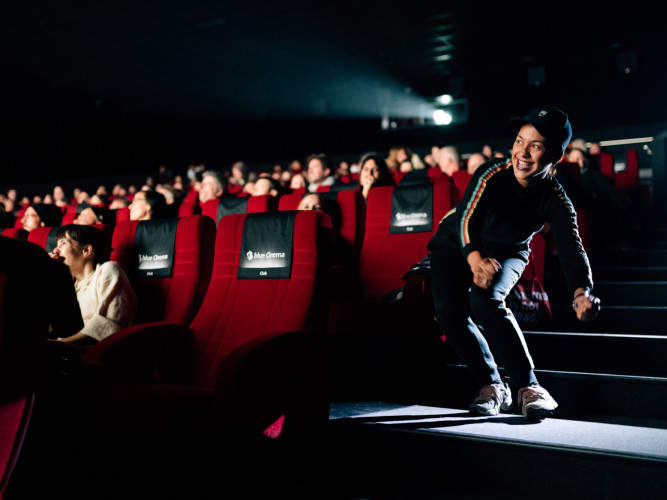
Des programmes de courts métrages sur des thématiques brûlantes, ou simplement divertissantes.
Programmes familiaux
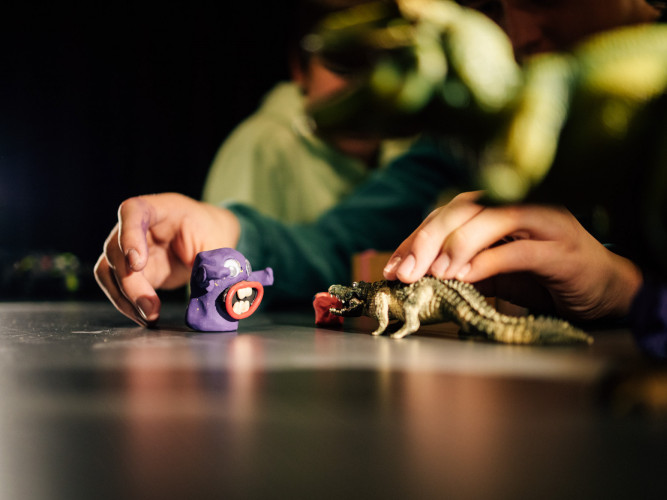
Des courts métrages pour les jeunes dès 6 ans et toute la famille.
Expanded Cinema
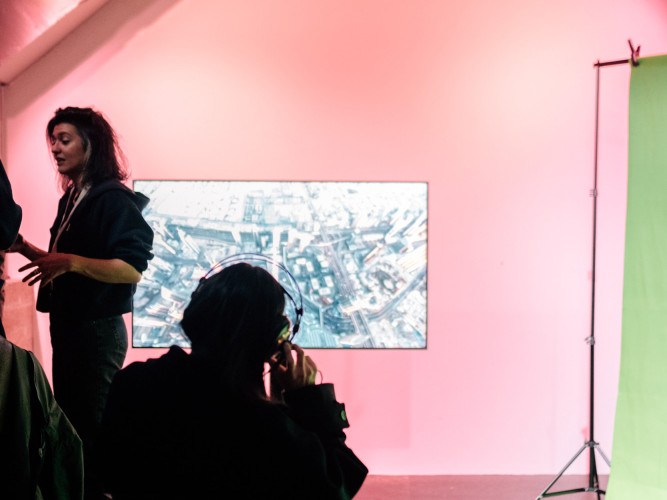
Des installations, des performances et des expositions qui font découvrir au public des formes de cinéma inhabituelles.
Programme d’événements
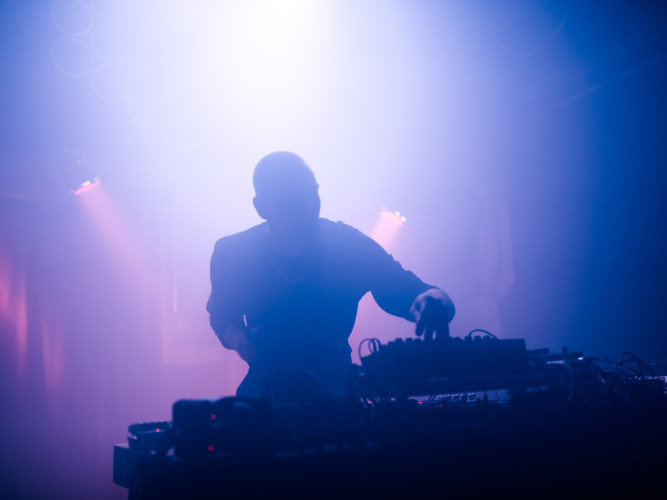
Des concerts, des soirées, des lectures et de nombreux autres événements qui complètent l’expérience du festival.
Discussions et podiums
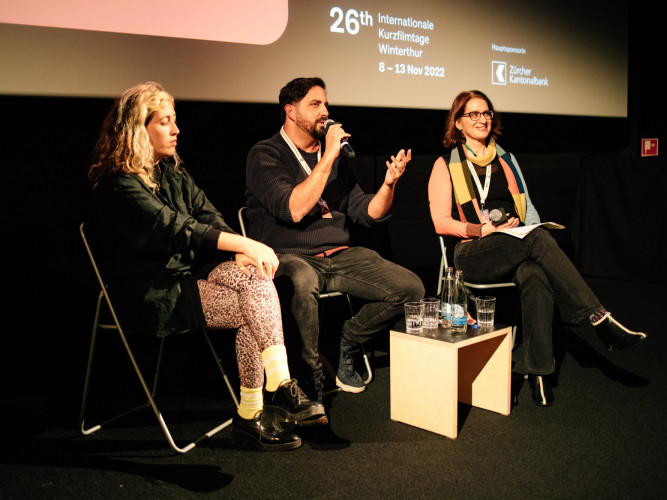
Des discussions et des tables rondes animées durant lesquelles l'art du cinéma ou des thématiques précises sont approfondis.
Industry Events
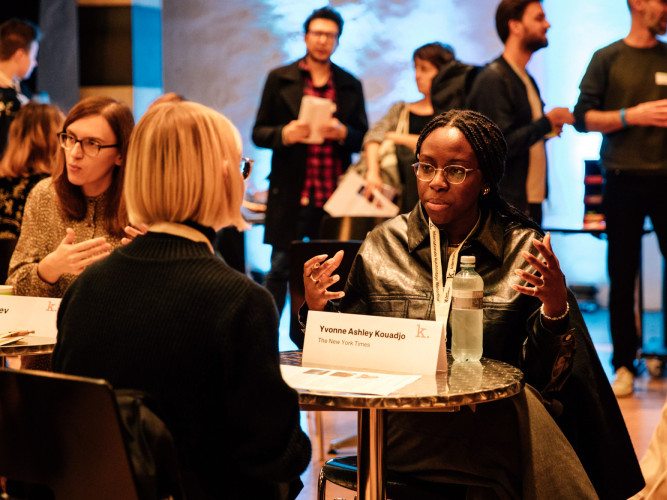
Un large éventail d’événements d’information, de formation et de réseautage.
Le court métrage
Le court métrage n’est pas juste un film «court». C’est une forme d’art à part entière à laquelle nous consacrons chaque année un festival.
Il existe des courts métrages de tous genres et de toutes longueurs. Grâce à des voies de production facilitées, il permet de capter rapidement une époque et de l’illustrer. Il divertit, surprend, analyse lasociété, exprime une opinion politique ou donne un aperçu de mondes étrangers.
Nous rassemblons nos courts métrages pour créer des programmes thématiques ou des sections – comme nos compétitions – et nous les projetons dans un ordre bien précis. Pour apprécier le court métrage, il suffit d’être curieux, d’avoir envie de faire des découvertes et de se laisser surprendre.