Ce site utilise des cookies pour l'analyse anonyme des visiteurs et pour désactiver ce message dès son acceptation. Aucune donnée personnelle ou d'identification n'est collectée.
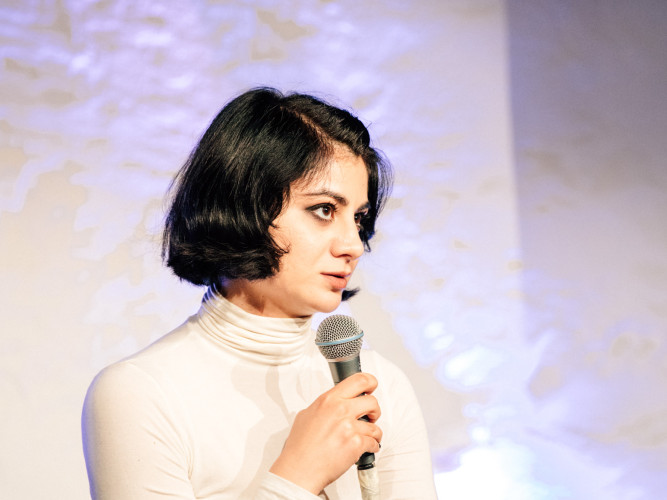
Isadora Neves Marques creates visions of the present and future, blending sci-fi, biopolitics, and intimacy. Her films explore reproduction, bodies, empathy, and power in a world shaped by technology. Moving between speculative fiction and artistic approaches to documentary, she examines queerness, relationships, and social utopias in ways that are radical, sensuous, and strikingly relevant.
An oil spill contaminates the Brazilian coast. Capivara, an offshore oil rig worker, is evacuated back to Rio de Janeiro, where the locals remain ignorant of the incoming disaster. Despite the danger, Capivara wishes only to return to the offshore oil fields. In the city, he is aided by Ywy, a woman who convinces him to travel to her homeland of Mato Grosso do Sul, in search of work in the soy and corn monoculture plantations. There, Ywy tells him about the infertility of those transgenic plants and an android like her. But Capivara, a human, is incapable of understanding her.
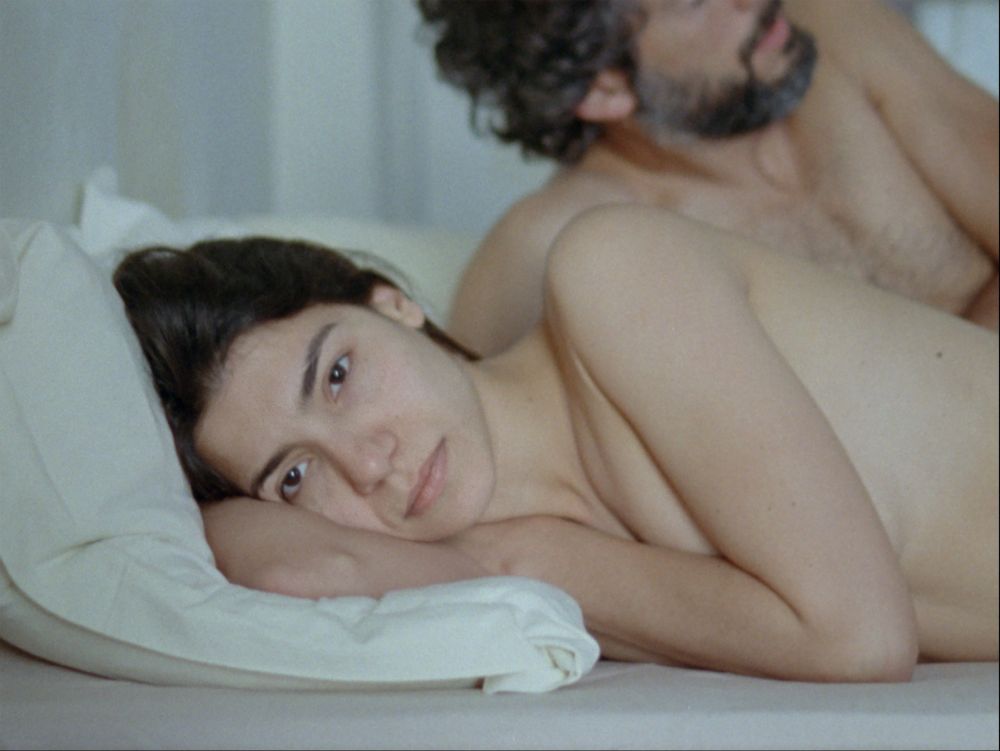
Two couples in their mid-thirties. While Mirene and André struggle with their fertility, Vicente decides to undergo an experimental procedure, implanting an ovary in his body in the hopes of having a child with Carl. A tale about queer sexuality, bodily autonomy, reproductive desires, and the ghost of normativity.
Our Lady Who Burns Alice dos Reis / Portugal 2023 / 8' / DCP / colour / English / Exp
Portugal’s Serra da Gardunha is a mountain known for the paranormal. Where before it was revered as a site of saintly apparitions, nowadays it is known for mysterious light sightings, with rumours of a UFO hangar hidden inside it. Atmospheric and dream-like, «Our Lady Who Burns» guides us through this mountain and an intergenerational lore of infatuations. In parallel, two friends lament the pregnancy of their old cat, speculating on whether the mystical energy of the mountain might be able to interrupt its gestation.
Lourdes and Lana met telepathically using «sensory pills», a technology that allows access to other people’s sensations from a distance. After months of their relationship, Lourdes decides to visit the country house of her parents, Vicente and Carl, and introduce them to her girlfriend. An unforeseen storm changes their weekend plans, locking them at home and, faced with the news of a child missing in the storm, Lana begins to question the limits of her telepathy.
Isadora Neves Marques, born in 1984 in Lisbon, is a Portuguese artist, filmmaker, poet, and writer. Her work uniquely combines science, technology, ecology, gender, and queer identity. Until 2022, she worked under the name Pedro Neves Marques.
Isadora’s interdisciplinary practice moves between film, visual arts, and literature. In both poetic and analytical ways, she explores the effects of social, political, and biological systems on the human body and interpersonal relationships. In her artistic work, Neves Marques combines speculative fiction with documentary elements, drawing on strategies of science fiction to address contemporary questions around reproductive technologies, gender identity, biopolitics, or simply love and friendship. This is particularly evident in her films, which have been screened at numerous international festivals. In works such as «Exterminator Seed» or «The Bite», she addresses topics like genetic manipulation, virus outbreaks, and polyamorous relationships, continuously challenging normative ideas of gender, family, and intimacy. Her film «Becoming Male in the Middle Ages» explores reproductive desires in the context of queer identity, while «My Senses Are All I Have to Offer» tells of a biotechnology that allows people to experience the sensations of others – a fictional metaphor for empathy, transformation, and shared experience. Her films have been shown at the Semaine de la Critique in Cannes, Toronto International Film Festival (TIFF), International Film Festival Rotterdam (IFFR, where she was awarded the Ammodo Tiger Short Award for best short film in 2022), Festival du Nouveau Cinéma Montréal, New York Film Festival, Curtas Vila do Conde, and Internationale Kurzfilmtage Winterthur, among many others.
Neves Marques is also internationally recognized as a visual artist. She represented Portugal at the 59th Venice Biennale with her project «Vampires in Space», a speculative and political work that uses imaginaries of space sci-fi and vampires to reflect on transgender identity, mental health, and blockbuster cinema. Her works have been shown at major institutions such as Castello di Rivoli, Palais de Tokyo, Pérez Art Museum Miami, and Kyoto City University of the Arts Gallery, among others. She repeatedly succeeds in translating scientific and technological content into sensuous, narratively dense installations that are both intellectually challenging and emotionally accessible. In addition, Isadora Neves Marques has also established herself as a writer. Together with artist Alice dos Reis, she founded the poetry press Pântano Books in 2020, dedicated to promoting contemporary poetry. Her written works include collections of poetry and short stories. The films «Our Lady Who Burns» by Alice dos Reis and «Flores» by Jorge Jácome – both close companions of Isadora and key figures in contemporary Portuguese cinema and visual art – are also featured in the programme.
Isadora’s multimedia work, which constantly oscillates between reality and fiction, body and technology, science and poetry, has received multiple awards, including the Present Future Art Prize at Artissima and a special award from the Pinchuk Future Generation Art Prize. Together with other artists, she runs the production company Foi Bonita a Festa and, between 2015 and 2020, she operated the online platform inhabitants, which focused on socio-political issues through documentary and experimental video works.
Isadora Neves Marques is one of the most exciting voices in contemporary art and film. Her works not only question existing power structures and normative systems but also open alternative perspectives on possible, more just futures. Her art is both analysis and empathy – a rare balance that she maintains with extraordinary sensitivity and intellectual precision.
Future Loves
Isadora Neves Marques, born in 1984 in Lisbon, is a Portuguese artist, filmmaker, poet, and writer. Her work uniquely combines science, technology, ecology, gender, and queer identity. Until 2022, she worked under the name Pedro Neves Marques.
Isadora’s interdisciplinary practice moves between film, visual arts, and literature. In both poetic and analytical ways, she explores the effects of social, political, and biological systems on the human body and interpersonal relationships. In her artistic work, Neves Marques combines speculative fiction with documentary elements, drawing on strategies of science fiction to address contemporary questions around reproductive technologies, gender identity, biopolitics, or simply love and friendship. This is particularly evident in her films, which have been screened at numerous international festivals. In works such as «Exterminator Seed» or «The Bite», she addresses topics like genetic manipulation, virus outbreaks, and polyamorous relationships, continuously challenging normative ideas of gender, family, and intimacy. Her film «Becoming Male in the Middle Ages» explores reproductive desires in the context of queer identity, while «My Senses Are All I Have to Offer» tells of a biotechnology that allows people to experience the sensations of others – a fictional metaphor for empathy, transformation, and shared experience. Her films have been shown at the Semaine de la Critique in Cannes, Toronto International Film Festival (TIFF), International Film Festival Rotterdam (IFFR, where she was awarded the Ammodo Tiger Short Award for best short film in 2022), Festival du Nouveau Cinéma Montréal, New York Film Festival, Curtas Vila do Conde, and Internationale Kurzfilmtage Winterthur, among many others.
Neves Marques is also internationally recognized as a visual artist. She represented Portugal at the 59th Venice Biennale with her project «Vampires in Space», a speculative and political work that uses imaginaries of space sci-fi and vampires to reflect on transgender identity, mental health, and blockbuster cinema. Her works have been shown at major institutions such as Castello di Rivoli, Palais de Tokyo, Pérez Art Museum Miami, and Kyoto City University of the Arts Gallery, among others. She repeatedly succeeds in translating scientific and technological content into sensuous, narratively dense installations that are both intellectually challenging and emotionally accessible. In addition, Isadora Neves Marques has also established herself as a writer. Together with artist Alice dos Reis, she founded the poetry press Pântano Books in 2020, dedicated to promoting contemporary poetry. Her written works include collections of poetry and short stories. The films «Our Lady Who Burns» by Alice dos Reis and «Flores» by Jorge Jácome – both close companions of Isadora and key figures in contemporary Portuguese cinema and visual art – are also featured in the programme.
Isadora’s multimedia work, which constantly oscillates between reality and fiction, body and technology, science and poetry, has received multiple awards, including the Present Future Art Prize at Artissima and a special award from the Pinchuk Future Generation Art Prize. Together with other artists, she runs the production company Foi Bonita a Festa and, between 2015 and 2020, she operated the online platform inhabitants, which focused on socio-political issues through documentary and experimental video works.
Isadora Neves Marques is one of the most exciting voices in contemporary art and film. Her works not only question existing power structures and normative systems but also open alternative perspectives on possible, more just futures. Her art is both analysis and empathy – a rare balance that she maintains with extraordinary sensitivity and intellectual precision.
Les Internationale Kurzfilmtage Winterthur représentent le plus important festival de courts métrages en Suisse. Chaque mois de novembre, Winterthour se transforme en métropole du court métrage pendant six jours.
Le programme des 30ᵉ Kurzfilmtage sera annoncé le 14 octobre 2026.
Des courts métrages actuels du monde entier. Les œuvres les plus prometteuses seront récompensées le dimanche soir.
Hors Concours
Des courts métrages actuels zurichois, suisses et internationaux diffusés en dehors de nos compétitions.
Focus
Une analyse en images d’une région, d’un phénomène social ou d’une tendance artistique.
Focus sur une personne
L’œuvre d’un·e cinéaste est mise sur le devant de la scène.
Programmes spéciaux
Des programmes de courts métrages sur des thématiques brûlantes, ou simplement divertissantes.
Programmes familiaux
Des courts métrages pour les jeunes dès 6 ans et toute la famille.
Expanded Cinema
Des installations, des performances et des expositions qui font découvrir au public des formes de cinéma inhabituelles.
Programme d’événements
Des concerts, des soirées, des lectures et de nombreux autres événements qui complètent l’expérience du festival.
Discussions et podiums
Des discussions et des tables rondes animées durant lesquelles l'art du cinéma ou des thématiques précises sont approfondis.
Industry Events
Un large éventail d’événements d’information, de formation et de réseautage.
Le court métrage
Le court métrage n’est pas juste un film «court». C’est une forme d’art à part entière à laquelle nous consacrons chaque année un festival.
Il existe des courts métrages de tous genres et de toutes longueurs. Grâce à des voies de production facilitées, il permet de capter rapidement une époque et de l’illustrer. Il divertit, surprend, analyse lasociété, exprime une opinion politique ou donne un aperçu de mondes étrangers.
Nous rassemblons nos courts métrages pour créer des programmes thématiques ou des sections – comme nos compétitions – et nous les projetons dans un ordre bien précis. Pour apprécier le court métrage, il suffit d’être curieux, d’avoir envie de faire des découvertes et de se laisser surprendre.